Virginia Revel’s letters
The Secret of ChimneysVirginia Revel’s letters are forged love letters bearing her name, but their importance lies in the chain of possession and danger they set in motion. Inherited by James McGrath from a dying blackmailer, the bundle reaches Anthony Cade as a commission to return it to the woman who had been threatened by it. One letter points toward Chimneys; later, the letters become the means by which a blackmailer confronts Virginia and the object sought after a killing. Their intimate appearance conceals a public and political tangle.
Origin and Inheritance
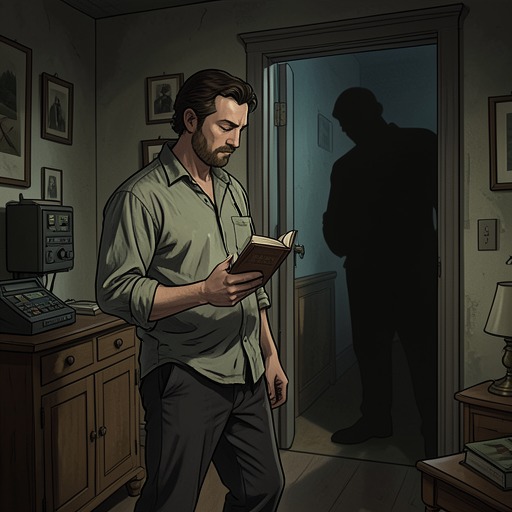
The letters come to James McGrath through a dying man known as Dutch Pedro. McGrath had been with him when he succumbed to fever, about six months after McGrath had saved his life. As he was dying, Pedro beckoned McGrath, whispered excitedly about what McGrath took to be a gold mine, and placed in his hand an oilskin packet he had kept next to his skin. McGrath did not open it until a week later. The packet contained a woman’s letters, not a map or prospectus for a mine.
The discovery also exposed the packet’s ugly history: Pedro had been blackmailing the woman. McGrath initially thought of burning the letters, but then imagined their destruction might leave their owner unaware that they were gone and still living in fear that the blackmailer could return. He decided that they should be restored to her instead. The letters therefore pass to McGrath not as a treasure to exploit but as an uncomfortable responsibility inherited from the man whose life he had saved.
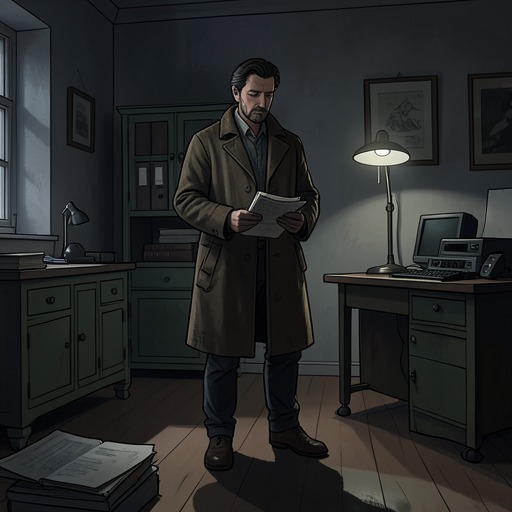
McGrath’s attempt to identify the owner is frustrated by the letters’ scant information. Most carry neither a date nor an address. One gives a single word, “Chimneys,” which immediately catches Cade’s attention because Chimneys is already part of the larger affair surrounding him. McGrath hands Cade the bundle to carry out the return, although Cade would rather not inspect the letters. That reluctance contrasts with their growing importance: the papers are private in content, but the circumstances around them make them impossible to treat as a simple delivery.
The Forgery and the Blackmail
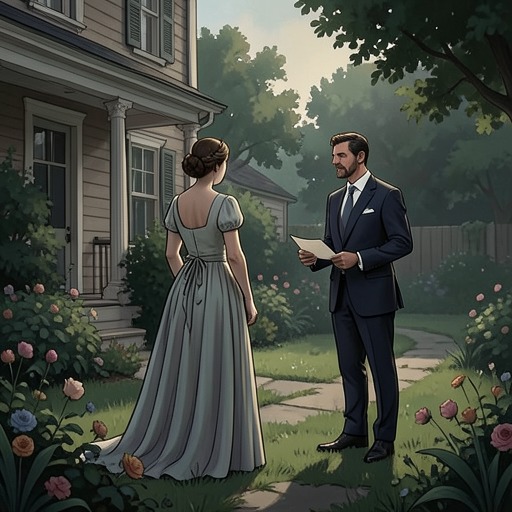
The letters are not written by Virginia, though they bear her signature. When a man presents one to her and draws attention to the address, Virginia reads that it is addressed to Captain O’Neill at Rue de Quenelles No. 15, Paris. He then turns the letter over and points to the signature. Virginia sees her own name, written in a delicate, slanting hand, and recognizes that the letter’s nature makes the threat clear. She confirms that the signature is hers, while the forged document gives the blackmailer a means to represent her as the author of an incriminating correspondence.
The letters’ force depends on this gap between signature and authorship. The blackmailer does not need Virginia to accept the letters as genuine; he relies on their apparent ability to damage her and on the danger of their circulation. Virginia’s response is controlled: after the initial astonishment, she reads the whole letter and considers what it implies. The papers thus operate at once as fabricated evidence and as instruments of pressure, making a false written identity a real personal threat.
The Letters Become a Crime-Scene Clue
When Virginia recounts the events to Cade, she identifies the man as someone who had come to her house for the first time the previous day, carrying love letters signed with her name. Cade understands that the signature is not proof of Virginia’s authorship. His recognition shifts attention from the apparent scandal to the forged documents and the man using them to blackmail her.
After the man is found dead, Cade searches his pockets and discovers that he has been stripped of everything. The letters are missing, along with any other contents that might have been taken. A hole in the lining of his clothing shows that something had been roughly torn out, leaving behind only a scrap of paper. On it are the words “Chimneys 11.45 Thursday.” Cade reads this as something like an appointment. The fragment links the dead man’s concealed dealings back to Chimneys, echoing the single-word clue that had already appeared in McGrath’s bundle.
The disappearance of the letters matters as much as their discovery. Cade tells the hotel manager that he intends to recover them and asks for all possible information about the waiter, Giuseppe, while agreeing that the matter should not be taken to the police. The episode places the bundle inside a parallel investigation: it is both a danger to Virginia and a missing object whose route may reveal who is involved. The torn lining offers only a remnant, but the remnant preserves the distinctive place-and-time clue.
Political Connections and Narrative Function
The letters’ path intersects with the memoirs of Count Stylptitch. Lord Caterham is told that the memoirs had been secretly removed before the Count’s death and sent to James McGrath, then in Africa; McGrath is due to arrive aboard the Granarth Castle. This information situates McGrath among the people and documents at the heart of the broader Chimneys affair. His possession of Virginia’s letters is a separate commission, but the shared chain of delivery brings the private blackmail plot into the same network of political secrets and contested papers.
The letters also become part of the explanation of the murder and its aftermath. Virginia describes the blackmailer and the forged love letters to Cade, and the missing papers raise the prospect of further trouble over their recovery. Later, Cade explains that he and Hiram Fish went to Dover believing Cade was King Victor, and that they found a mysterious stranger imprisoned there. His account describes a recurring pattern in which a real person is kidnapped and an impostor takes his place. This later revelation does not make the letters themselves political documents; rather, it clarifies the novel’s wider concern with appearances that can be manipulated. The forged signature is the intimate version of the same instability: a name can be made to stand for an identity its bearer never authored.
The surviving evidence of the letters is distributed across several forms: McGrath’s story of Pedro’s bequest, Virginia’s confrontation with the blackmailer, Cade’s account of the stripped body, and the fragment recovered from the torn lining. No single account contains the whole route or resolves every question about the documents. Their scattered clues make them a connective object in the narrative, carrying the plot from an African deathbed and an oilskin packet to Virginia’s house, the murder investigation, and the recurring Thursday appointment at Chimneys.